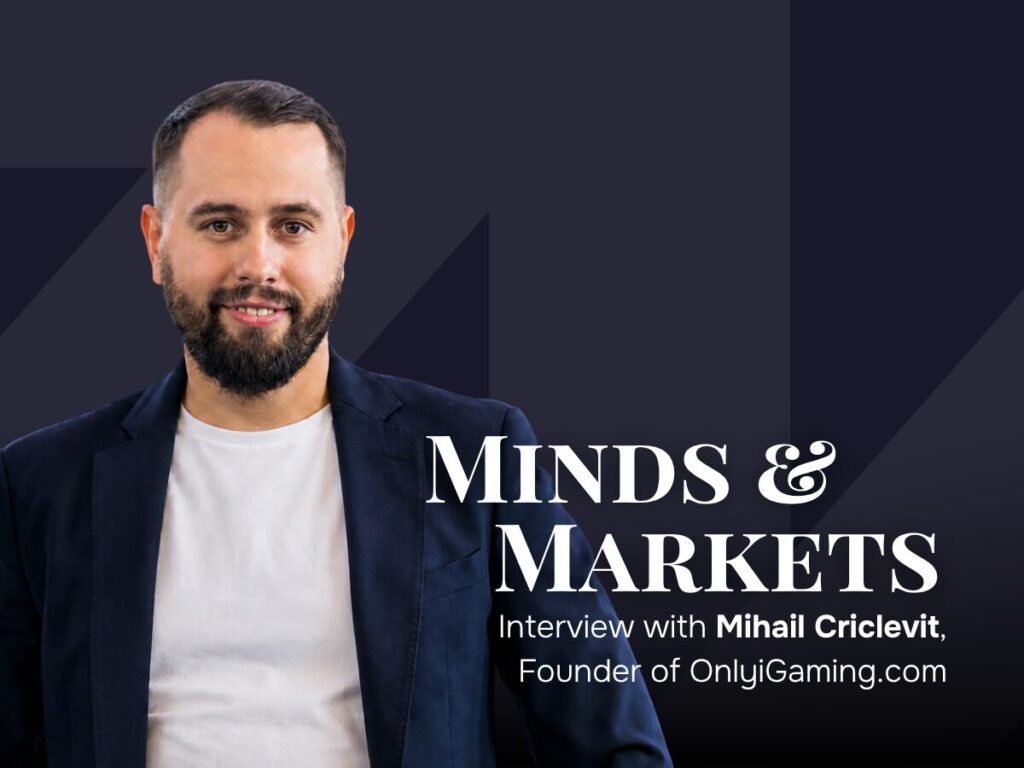
Minds & Markets: Mihail Criclevit on Personal Brand, AI Reality, and Real Audience Ownership
September 3, 2026

Everyone in iGaming talks about performance. Traffic numbers. Conversion rates. ROI.
But the longer this industry grows, the clearer it becomes: metrics alone don’t build lasting companies. Brands do. People do. Reputation does.
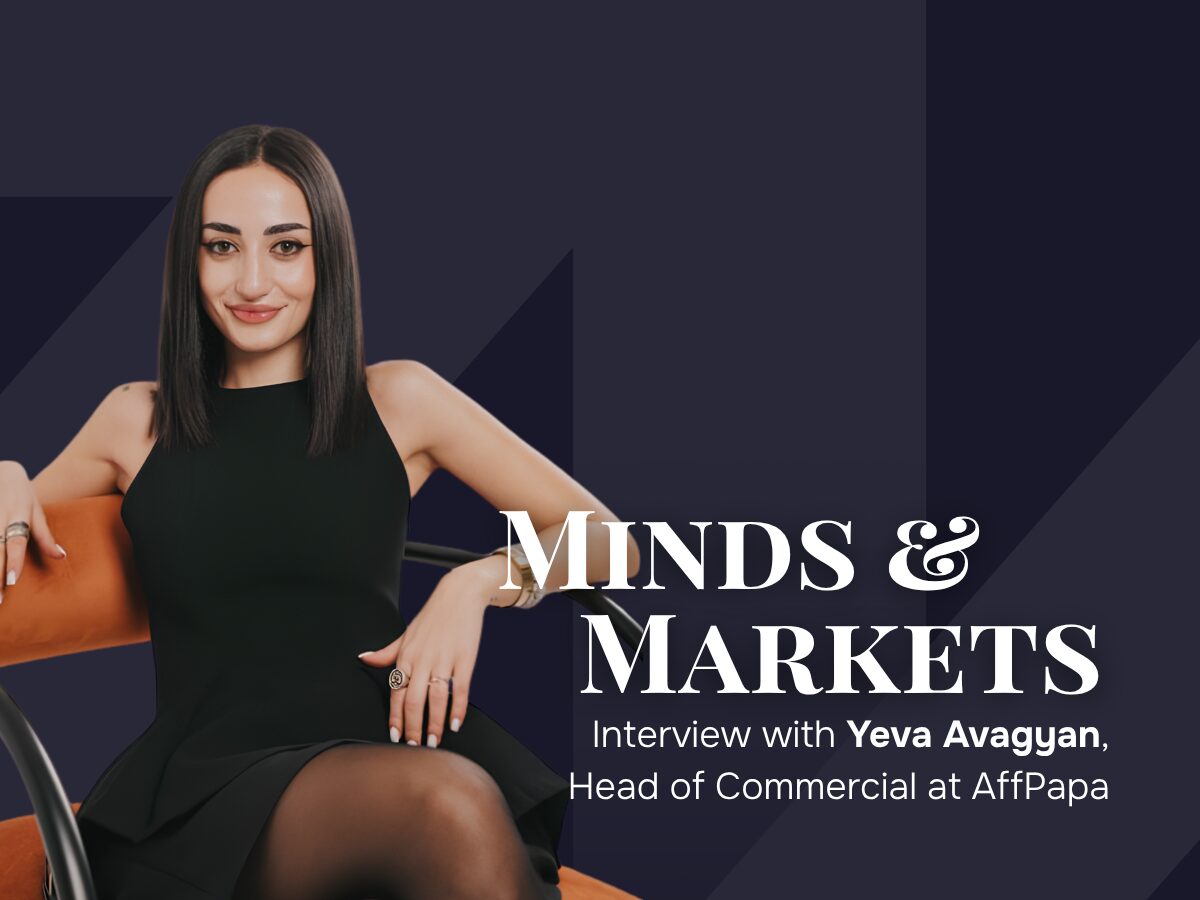
For the first edition of our new interview series Minds & Markets, Yeva Avagyan, Head of Commercial at AffPapa, shares her thoughts on the company’s new chapter, the rise of personal branding in iGaming, and what separates meaningful industry relationships from transactional ones.
I think it was a bit of both. The rebrand was definitely not just about changing a logo or refreshing colors because we got bored of the old look. It was more about aligning the outside with what AffPapa had already become internally. Over the years, we evolved from being “just” a directory into something much bigger. An ecosystem, a place where real business relationships happen.
The old branding represented our starting point, but the new one represents something bigger. It tells the industry that we’re not experimenting anymore, we know exactly who we are and where we’re going. So yes, it was absolutely the beginning of a new chapter.
Metrics will always matter in iGaming, of course. At the end of the day, everyone looks at performance. But I do think the industry is slowly realizing that traffic without trust is very short-term thinking. You can buy clicks, you can push numbers, but you cannot fake reputation for years.
Brand is becoming one of the strongest currencies in the industry now because people are more selective. Affiliates are more selective with operators, operators are more selective with partners, and players are more aware too. Everyone has options.
I don’t think a personal brand is mandatory, but I do think visibility matters more than ever. People want to work with people now, not faceless logos. Especially in iGaming, where relationships are such a huge part of business. Some of the strongest people in this industry are still very private and successful. But usually, they’ve built years of trust offline already. For newer founders especially, having a personal presence speeds things up massively because people feel like they know you before meeting you.
That’s honestly the hardest part. Scaling something boutique is very different from scaling something transactional. The moment you focus only on numbers, you risk losing the atmosphere that made people fall in love with the concept in the first place.
With the iGaming Club, we’ve always cared a lot about chemistry in the room. Not just attendance. I’d rather have 300 highly relevant people networking properly than 3,000 random attendees collecting badges and leaving after one drink.
Our main challenge is protecting the experience while still growing globally. And that requires saying “no” quite often. Saying no to overcrowding, no to partnerships that don’t align, no to doing things just because they’re trendy. Growth is important, but preserving the feeling is even more important because once you lose that, it’s very difficult to get back.
Throwing money at affiliates might get attention temporarily, but it rarely creates loyalty anymore because every operator can technically increase commissions. That alone is not a differentiator today.The operators that stand out are usually the ones that make affiliates feel supported, respected, and secure long-term. Fast communication matters. Transparency matters. Payments matter a lot. Brand reputation matters too.
Affiliates talk to each other constantly, much more than we think. So if an operator develops a reputation for being unreliable or difficult, that spreads very fast. New operators need to focus on relationship-building, not just aggressive offers. In many cases, being easy to work with always beats having the highest CPA.
AI will change networking in many ways. It’s helping with introductions, matchmaking, follow-ups, personalization, all of that. But I still think human chemistry is incredibly difficult to replicate digitally. Maybe hybrid networking becomes more advanced in the future, but I think face-to-face interaction will always carry a different level of trust, especially in industries like ours where relationships are everything.
There’s definitely a line, but naturally the two overlap a lot now. When you spend years representing a company publicly, especially in such a relationship-driven industry, people start associating your personality with the brand itself.
But I don’t try to create a “corporate version” of myself at events. What people see is genuinely me. I think that’s why it works. If I had to perform a character every day, it would become exhausting very quickly.
Of course, professionally you carry responsibility and you represent something bigger than yourself. But authenticity is extremely important to me. I want people to feel the same energy whether they meet me at a conference, a dinner, or online.
Probably “cozy” – the most common word people describe our events and conferences by.
I want people to leave our events feeling like they found their people. The industry can be very fast, very competitive, sometimes even overwhelming, so creating spaces where conversations feel natural, warm, and genuine is really important to me.
That cozy, human atmosphere is something we care about a lot. Because when people feel comfortable, real connections happen naturally.