Minds & Markets: Yeva Avagyan on Branding, Trust, and the Human Side of iGaming
May 27, 2026

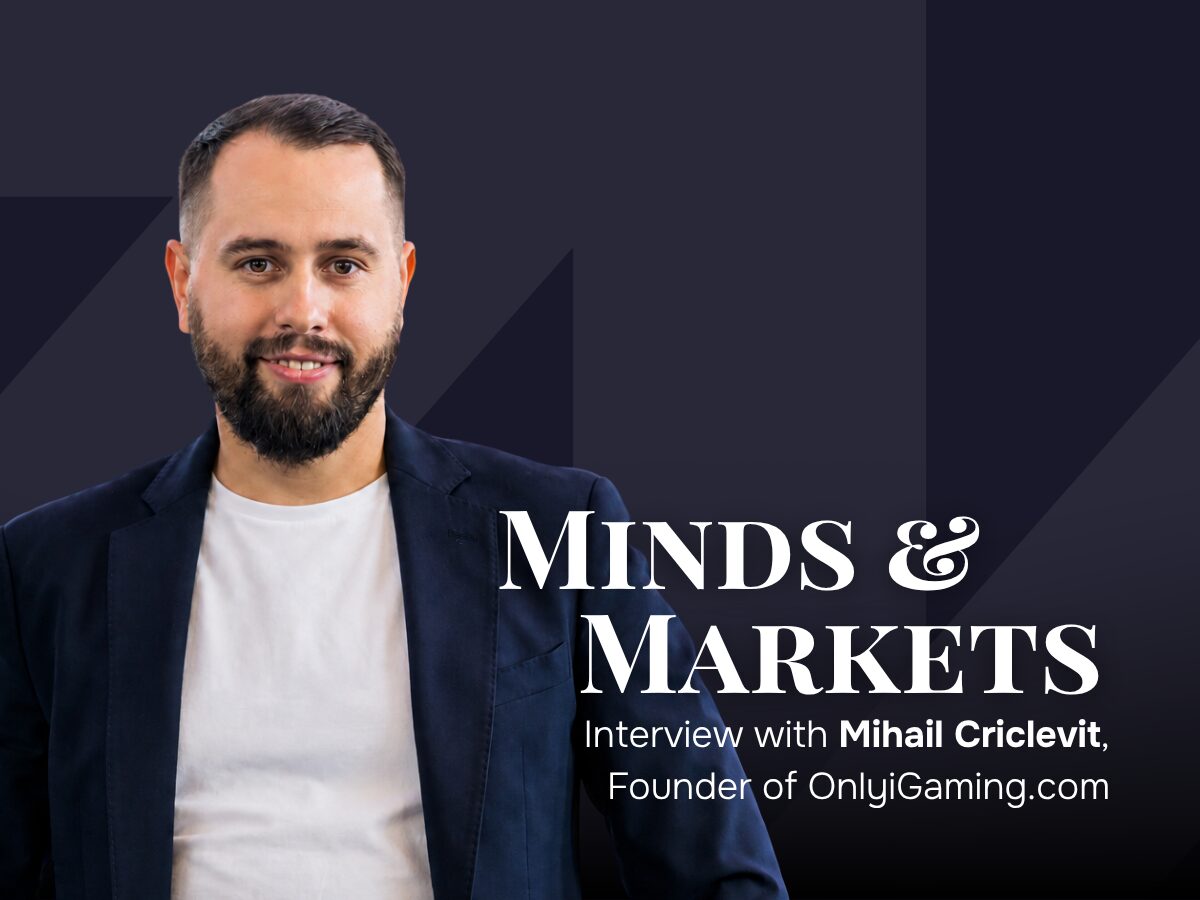
People do business with people, not abstract brands.
That’s why Mihail Criclevit, founder of OnlyiGaming.com, put his own face and name directly on the line — becoming one of the most recognizable voices on iGaming LinkedIn.
In this edition of Minds & Markets, Mihail gives us an honest look at why personal branding matters, why old affiliate SEO is dying, and the vision behind his platform.
Because OnlyiGaming is built on openness, and I can’t pitch transparency from behind a logo. It would ruin the message.
People do business with people, not abstract brands. If I want others in iGaming to step out and be seen, I have to go first. Putting my name and face on the line is a calculated bet that visibility beats anonymity. So far, that bet has paid off.
Your numbers get deals signed; no one contracts with you because of a nice post.
But a personal brand is leverage. Take two executives with identical numbers: one is a trusted voice, the other is just a name on an invoice. The known executive gets the meeting faster and receives the benefit of the doubt when things break. You can let the numbers talk alone, but you’ll work twice as hard to open every door.
Of course I use it. Research, rough drafts, spreadsheet cleanup, admin and anything that burns hours without adding original thought. It would be foolish not to.
My boundary is strict: AI never writes what goes out under my name. “AI slop” isn’t about using the tool; it’s about outsourcing your thinking, publishing empty text, and expecting people to care. The tool is fine. Surrendering your voice is not. If a machine can write your post, the thought wasn’t worth sharing.
Both. Most front-facing AI right now is pure hype, a basic chatbot slapped onto a support page to fuel a PR release.
The meaningful shifts are quieter and behind the scenes: CRM, personalization, fraud prevention and risk management. That is where AI fundamentally improves operations. Over the next few years, the real impact will be operational, not in churning out text nobody reads. Usually, the louder someone talks about AI, the less effectively they use it.
Whether you own your audience or rent traffic from Google. That’s the whole line.
The spray-and-pray operators built for search algorithms, not humans. When the algorithms shifted, they were left with zero equity—no brand, no repeat visitors, no direct connection. The survivors built actual media assets: a distinct voice, a recognized brand, and a direct community. If Google vanishes tomorrow, true media businesses keep their audience. The rest disappear.
That the word “partner” does heavy lifting. Everyone uses it, but the power dynamic is rarely equal.
Whichever side holds the scale sets the rules, and the smaller party adapts. When you have scale, you have leverage; when you don’t, you have a contract that is difficult to enforce. It isn’t a scandal, it’s just how power works in business. People just wait for a few drinks before admitting it out loud.
It started as a clean directory and a central place to map B2B iGaming, where information was scattered and sat inside private networks.
People didn’t want us to just publish news about them. They wanted direct access and a space of their own. So we built user profiles, direct chat, community-generated reviews, and let people publish their own news and PR right inside the platform. Now, over 5,000 people come to the site every month to connect, share ideas, and do business.
The market pushed us from a static list into an active ecosystem, but the core philosophy never shifted: we don’t sell rankings, and we don’t sell silence. Every company is represented based on what they actually offer, governed by clear structures rather than how much they spend. The format evolved, but our neutrality remains our foundation.
A directory is just a list. I want OnlyiGaming to be the infrastructure the industry runs on a shared space where anyone can discover talent, build a reputation, share ideas, and close deals.
It’s not about fighting gatekeepers; it’s simply about opening the door wider so everyone has a platform. Right now, if you are a newcomer or a smaller player, it’s hard to get seen regardless of capability. We want to give everyone that space. Reviews are real, criticism is allowed, and praise is earned on merit.
If we ever violate these principles intentionally or not we pledge to own it, fix it, and make it visible. Integrity is not just what we promise; it’s what we protect. The day someone tells me they landed their first major partner through OnlyiGaming starting from zero, just by using the space we built, I’ll know it worked.